From the desk of the resident archaeologist

The Sacred City
& everything around it.

A guided journey through twenty-three centuries of Sri Lankan civilisation — from the colossal stupas of Anuradhapura to the rock fortresses, ancient reservoirs and elephant-strewn parks that surround them.

A Note from the Site

"You are standing in the middle of one of the longest-inhabited cities in Asia."

Anuradhapura was founded in the fourth century BCE and served as the island's capital for almost fourteen hundred years. What survives today — the brick stupas, the bathing pools, the moonstones, the carved guardstones — is the architectural memory of more than a hundred recorded kings.

The hotel's pleasure is to make this legible: to suggest the right routes, the quietest hours, and a guide who can read what the ruins are saying.

R
Rajarata Concierge
Heritage & Excursions Desk
An Archaeologist's Guide

Why this corner of Sri Lanka matters.

By the second century BCE the Sinhalese had perfected three things at once: a state-administered Buddhist orthodoxy, a hydraulic civilisation that turned the dry zone into rice paddy, and a tradition of building in fired brick at a scale Europe would not match for another thousand years. Anuradhapura is where you can see all three in the same morning's walk.

UNESCO inscribed the Sacred City as a World Heritage Site in 1982, but the protected zone is only the centre of a much wider archaeological landscape. Within an hour's drive of the hotel you can stand under a tree planted in 288 BCE, walk into a fifth-century rock fortress, watch three hundred elephants meet at a tank built by the same kings who built the stupas, and end the day under a Buddha carved straight from living granite.

The page below is organised the way we'd actually take you: in four geographic zones, plus the parks, plus the practicalities. Distances are measured from Rajarata Hotel.

Heritage illustration of kings venerating the Bodhi tree
288 BCE · The Living Relic

A tree planted by
a princess, still standing.

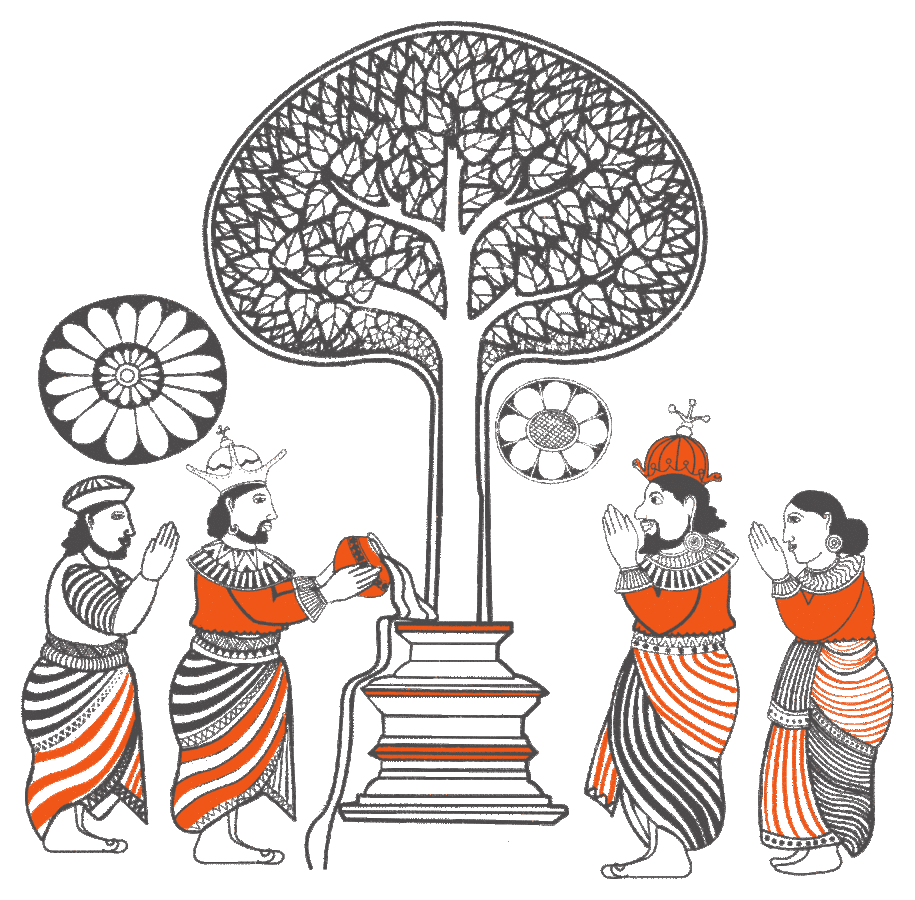
The Jaya Sri Maha Bodhi was planted in 288 BCE from a southern branch of the original Bo tree at Bodh Gaya, brought to Sri Lanka by the Theri Sanghamitta. For 2,300 years it has been continuously tended by an unbroken lineage of guardians — kings, queens, and monks recorded in the chronicles, ordinary devotees in living memory.

It is two kilometres from your room. The first ceremonies of the day begin before sunrise.

Zone One · UNESCO 1982

The great brick stupas of the Sacred City.

Seven monumental dagobas line up across the old city, each tied to a king and a relic. Walked end to end they trace fifteen centuries of architectural ambition — from Devanampiya Tissa's modest reliquary at Thuparamaya to Mahasena's vast Jetavana, in its time the third-tallest structure in the ancient world.

Within2–4 km of the hotel
Best at06:30 & 17:30
Time neededHalf a day
DressKnees & shoulders covered
Living relic · 288 BCE Jaya Sri Maha Bodhi, Anuradhapura — sacred fig tree on tiered platform
The Living Relic2 km from hotel

Jaya Sri Maha Bodhi

Ficus religiosa · grown from a southern branch of the Bodhi tree at Bodh Gaya

The oldest historically documented tree in the world. Brought to the island by the bhikkhuni Sangamitta — daughter of Emperor Ashoka — and planted in 288 BCE under the patronage of King Devanampiya Tissa. Every Sinhalese sovereign since has been crowned in the shadow of its descendants.

Approach barefoot from the southern terrace just before sunrise: the courtyard fills with white-clad pilgrims, oil lamps flicker against the carved railing, and you can sometimes hear the brass-bound leaves rustle a full minute before the wind reaches you.

Planted
288 BCE
Status
Royally tended
Visit
All day · best at dawn
Archaeologist's note — the gold-plated railing you see today is modern; the original third-century stone railing fragments are arrayed in the small site museum. Look for the punch-marked coins and ivory caskets recovered from the relic chamber of nearby Ruwanwelisaya.
Great Stupa Ruwanwelisaya Stupa, Anuradhapura — large white-domed dagoba
Mahathupa2.4 km

Ruwanwelisaya

"The stupa of golden sand" · King Dutugemunu, c. 140 BCE

Built by Sri Lanka's most celebrated warrior-king after his defeat of Elara, and consecrated with relics of the Buddha himself. Originally faced with white lime plaster, fronted by a "wall of elephants" that you can still walk around. Currently c. 90 m to the spire — slightly shorter than its original height after the 11th-century Chola raids.

Built
c. 140 BCE
Patron
Dutugemunu
Height
~90 m
Look for — the 344 elephant figures around the basal terrace. The four small structures at the cardinal points (vahalkadas) are among the earliest examples of stupa frontispiece architecture in South Asia.
First stupa · 250 BCE Thuparamaya Stupa with surrounding stone columns
Earliest dagoba in SL2.6 km

Thuparamaya

"Heap of relics" · King Devanampiya Tissa, c. 250 BCE

The first stupa built on the island, raised after the conversion of King Devanampiya Tissa by Arahat Mahinda. Said to enshrine the right collarbone of the Buddha. The bell-shaped form is later restoration; the encircling stone pillars once supported a vatadage — a wooden roof now lost.

Built
c. 250 BCE
Relic
Right collarbone
Type
Bubble (bubbulākāra)
Archaeologist's note — the ring of 41 monolithic granite pillars (most still standing, several in fragments) is one of the earliest surviving examples of vatadage construction in the Buddhist world.
Once the world's tallest Jetavanaramaya Stupa, the colossal red-brick dagoba
~93 million bricks3.1 km

Jetavanaramaya

King Mahasena · late 3rd–early 4th century CE

At its original 122 m it was the third tallest structure of the ancient world, behind only the Great Pyramids at Giza. Its monastic complex once held three thousand monks. Today the unrendered red brick gives the clearest sense of how these stupas were built — by an estimated 93 million bricks set in lime-and-clay mortar.

Original ht.
122 m
Bricks
~93 million
Monastery
Sagaliya sect
Don't miss — the small museum on site holds the gold-and-crystal reliquary and the famous lime-mortar formula tablet. The brickwork itself is the lecture: notice how the bonding pattern shifts at every 1.2 m of height to manage compressive load.
Heterodox monastery Abhayagiri Dagoba — large brick stupa with surrounding terraces
5,000 monks at peak3.4 km

Abhayagiri Dagoba

King Vattagamani Abhaya · 89–77 BCE

The independent monastic university that broke from the orthodoxy of Mahavihara. Welcomed Mahayana and Vajrayana scholars and at its height housed 5,000 monks. The Chinese monk Faxian studied here for two years in the early fifth century, and recorded the city in detail.

Founded
89 BCE
School
Dhammaruci · later Mahayana-friendly
Faxian
Stayed 2 years, c. 411 CE
Walk on to — the Kuttam Pokuna twin bathing pools, the Samadhi Buddha statue and the Mahasena's Palace moonstone — all part of the Abhayagiri precinct and within ten minutes' stroll.
A king's penance Mirisawetiya Stupa with white plaster facing
King's atonement2.2 km

Mirisawetiya

King Dutugemunu · 161–137 BCE

According to the Mahavamsa chronicle, Dutugemunu raised this stupa as atonement for eating chillies (mirisa) at a meal without first offering some to the sangha. The frontispieces (vahalkadas) are unusually well-preserved and have some of the finest early stone carving in the city.

Built
c. 140 BCE
Patron
Dutugemunu
Look for
Vahalkada carvings
Smallest of the great seven Lankarama Stupa with stone columns around it
Vatadage stupa3.6 km

Lankaramaya

King Vattagamani Abhaya · 1st century BCE

Quietly overlooked but architecturally important — Lankaramaya is one of the clearest surviving examples of a vatadage stupa, where the dagoba sits inside a pillared circular hall. Three concentric rings of stone columns once supported the conical wooden roof.

Built
1st c. BCE
Type
Vatadage
Pillars
88 in three rings
Zone Two · Royal & Monastic Art

Stone, water, and the Buddha in repose.

Between the great stupas lies the city's domestic and ceremonial fabric — palaces of fired brick, bathing pools cut to mathematical perfection, and a school of sculpture that produced some of the most refined religious art in South Asia.

Combine withZone One in same morning
On footYes — or bicycle
PhotographyAllowed (no flash)
1,600 stone columns Lovamahapaya — field of granite stone columns
The Brazen Palace2.5 km

Lovamahapaya

"Brazen Palace" · King Dutugemunu, 2nd c. BCE

1,600 monolithic columns are all that remain of what was once a nine-storied monastic residence with a copper roof and a thousand chambers. Burned, rebuilt, burned again across the centuries — the stone forest you see today is the foundation level of the third or fourth iteration.

Storeys
9 (original)
Roof
Copper-bronze
Function
Monastic chapter house
4th-century masterpiece Samadhi Buddha statue, Anuradhapura — seated meditation Buddha
Granite seated Buddha3.5 km

Samadhi Statue

Granite · 4th century CE · Mahabodhi posture

One of the finest sculptural objects on the island: a seated Buddha in dhyana mudra, carved from a single block of dolomitic limestone. Photographed at three angles, the face moves through three subtly different expressions — serenity, compassion, the suggestion of a smile.

Date
4th c. CE
Material
Dolomitic limestone
Mudra
Dhyana (meditation)
Test it yourself — stand to the right, then directly in front, then to the left. The change in expression is a deliberate effect of the way the lips and eyelids are cut. Few sculptures in the ancient world achieve this.
Hydraulic engineering Kuttam Pokuna twin bathing ponds
The Twin Ponds3.6 km

Kuttam Pokuna

Granite step-pools · 8th–10th century CE

Two bathing pools cut into bedrock, fed by a system of underground channels and silt traps that still functions when cleared. The smaller pool is 28 m long; the larger 40 m. Used by the monks of the Abhayagiri monastery, the geometry is mathematically exact to within centimetres.

Period
8th–10th c.
Length
40 m / 28 m
System
Settling tank-fed
"The Lovers" Isurumuniya rock temple, Anuradhapura
Rock-cut temple3.8 km

Isurumuniya

King Devanampiya Tissa · 3rd century BCE · Gupta-influenced sculpture

Founded for five hundred high-caste novices, but visited today for its sculpture. The famous "Isurumuni Lovers" relief — a Gupta-period stone of a seated couple — is housed in the small museum on the platform above the rock pool. The carved bathing-elephants frieze on the lower rock face is older still.

Founded
3rd c. BCE
Famous for
"The Lovers" relief
Visit
Climb the rock at sunset
Cave monastery Vessagiriya rock shelters, Anuradhapura
Brahmi inscriptions4 km

Vessagiriya

Forest-dwelling monastery · 3rd century BCE onward

An ensemble of 23 rock shelters and drip-ledged caves, several with second-century-BCE Brahmi donor inscriptions cut directly into the rock — among the oldest writing on the island. The monastery housed Vajjiriyans, an ascetic forest order. Quiet and far less visited than the city centre.

Inscriptions
Brahmi · 2nd c. BCE
Caves
23 documented
Atmosphere
Quiet, forested
Sandakada Pahana Sandakada Pahana — carved moonstone
Doorstep cosmologyWithin Sacred City

The Moonstone

Sandakada pahana · concentric rock relief

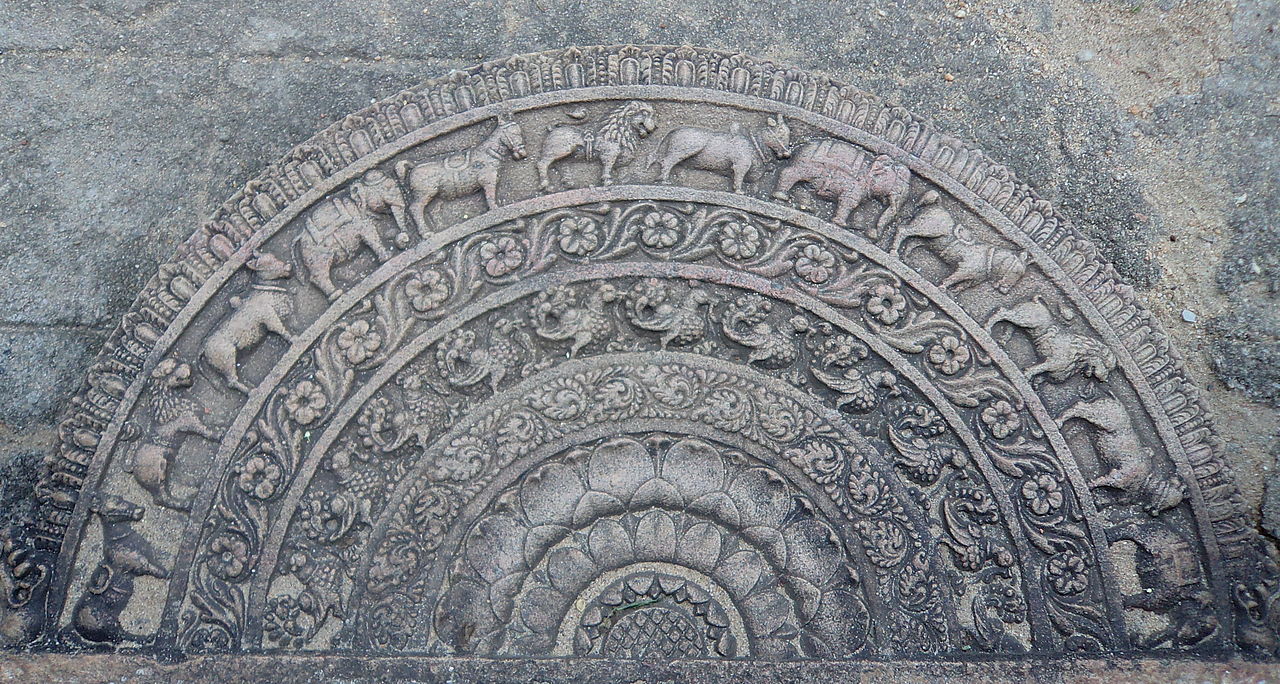
The semi-circular doorstep slabs at the foot of monastic stairways are not decoration — they are a cosmology. Concentric bands depict the four perils (elephants, horses, lions, bulls), the swirl of saṃsāra, and the lotus heart of liberation. The finest examples are at Mahasena's Palace and the Queen's Pavilion. Look closely: each mason's hand is different.

Periods
5th–9th c. (peak)
Bands
Four perils & the lotus
Best example
Queen's Pavilion
Royal pleasure garden Royal Water Gardens, Anuradhapura
Symmetrical hydraulics3 km

Ranmasu Uyana

Royal Water Gardens · early centuries CE

A 40-acre complex of ponds, sluices and bathing chambers laid out for Anuradhapuran royalty. Look for the small, much-debated "Sakwala Chakraya" — a stone diagram of concentric and intersecting circles whose interpretation has occupied epigraphers for a century (cosmological map? meditation aid? early world chart?).

Area
40 acres
Famous for
Sakwala Chakraya
Light
Late afternoon
Zone Three · Beyond the Sacred City

The hinterland — where Buddhism arrived.

Within an hour of Anuradhapura lie the sites that frame the Sacred City: the rock where the religion was first preached, the colossal Buddha at Aukana, the forest monastery of Ritigala, and the great irrigation tank that fed it all.

Distance12–60 km
TimeHalf to full day each
TransportHotel can arrange car & guide
Cradle of Buddhism · 247 BCE Mihintale rock and stupa
Where the island met the Buddha13 km · 25 min

Mihintale

"The mountain of Mahinda" · the meeting place of King Devanampiya Tissa and Arahat Mahinda, 247 BCE

Mihintale is the reason Anuradhapura matters. In 247 BCE, on this hilltop, King Devanampiya Tissa was hunting a deer when he was stopped by a monk — Mahinda, son of Emperor Ashoka — who tested him with a riddle of mango trees. The conversion that followed brought Buddhism to Sri Lanka.

The ascent is 1,840 stone steps, the original ones cut in the third century BCE. At the top: the Aradhana Gala (Rock of Invitation) where the meeting took place, the small Ambasthala Dagoba marking the spot, the Maha Stupa, and on a clear morning a view across the entire dry zone to Anuradhapura's white domes.

Date
247 BCE
Steps
1,840
Best time
Sunrise (Poson)
Take in too — Kantaka Chetiya, one of the earliest stupas on the island; the Kaludiya Pokuna (Black-Water Pond) at the foot of the western slope; and the rock-cut alms-hall ledger inscription, one of the oldest examples of administrative epigraphy in the country.
12.5 m monolithic Buddha Avukana Buddha — colossal standing rock-cut Buddha statue
Carved from living rock52 km · 1h 10min

Aukana Buddha

Kotuvagedi Kanda granite cliff · 5th century CE · Asisa mudra

A 12.5-metre standing Buddha carved from a single granite outcrop, attributed to the reign of Dhatusena (459–477 CE). The robe is treated as a single sweep of vertical drapery, lit perfectly by the rising sun. Aukana means "sun-eating" in old Sinhala — a name earned at dawn.

Height
12.5 m
Carved
5th c. CE
Pair with
Sasseruwa & Kala Wewa
Forest monastery Ritigala mountain reserve
Pamsukulika monastery43 km · 1 h

Ritigala

Strict Nature Reserve & archaeological monastery · 4th–9th c. CE

The remote ascetic monastery of the Pamsukulika sect — monks who wore robes stitched from rags. The architecture is austere on principle: long stone-paved paths, double-platform meditation pavilions (padhanagharas) without ornament, water channels cut to perfection. The mountain itself is a strict nature reserve and the only place in Sri Lanka where certain rare medicinal herbs grow naturally.

Sect
Pamsukulika
Pavilions
~70 padhanagharas
Biodiversity
Strict reserve
5th-century reservoir Kala Wewa reservoir
King Dhatusena's masterwork54 km · 1h 10min

Kala Wewa

Built 460 CE · feeds the 87 km Yoda Ela canal

One of the great hydraulic monuments of the ancient world. The 6-mile bund (dam) was built by King Dhatusena to feed the 87 km Jaya Ganga (Yoda Ela) — a canal whose gradient of 6 inches per mile was an engineering feat unmatched until modern surveying. Wading birds, water buffalo and the occasional wild elephant at dusk.

Built
460 CE
Bund
~6 miles
Canal
87 km Yoda Ela
13th-century capital Yapahuwa rock-cut staircase
Rock fortress capital97 km · 2 h

Yapahuwa

Capital of King Buwanekabahu I · 1273–1284 CE

A 90-metre granite outcrop crowned with a brief medieval capital, briefly the seat of the Tooth Relic. The ornamental staircase up to the palace is one of the finest pieces of late-Polonnaruwa-style stonework, with two roaring lions, dancing figures and a window screen carved in delicate trellis. The Tooth Relic was kept here in a shrine at the summit before being moved south.

Capital
1273–1284 CE
Height
90 m granite outcrop
See
The lion staircase
A Note on the Tanks

The hydraulic civilisation, still working.

The wewas — the great earthen reservoirs — are the reason any of this exists. Anuradhapura sits in the dry zone, with no significant river. Every drop of water that fed the city, the rice paddies and the monasteries was caught and held by hand-built bunds, some of them still in service after two thousand years.

Built3rd c. BCE — 12th c. CE
Best atDawn & dusk · birds
Within walkingTisa Wewa & Basawakkulama
3rd century BCE Tissa Wewa reservoir, Anuradhapura
Tisa Wewa1.2 km

Tisa Wewa

King Devanampiya Tissa · c. 250 BCE · 396 acres

The oldest of the Anuradhapura tanks and still working as it was designed to. Built by the same king who founded Buddhism on the island. The wide grassy bund is the city's evening promenade — bring binoculars for purple-rumped sunbirds, painted storks, and the occasional crocodile in the shallows.

Built
c. 250 BCE
Area
396 acres
Bund walk
3 km · sunset
1st century CE Nuwara Wewa lake, Anuradhapura
Largest of the city tanks2.8 km

Nuwara Wewa

Reign of Vattagamani Abhaya · 1st century BCE

The largest of Anuradhapura's three principal reservoirs at 1,200 hectares. The eastern bund offers the best uninterrupted view of the city's white stupas at sunset, with all five major dagobas visible on a clear evening. Cycling the bund road is a quiet pleasure.

Built
c. 20 BCE
Area
1,200 ha
Activity
Cycling, birdwatching
Zone Four · The Cultural Triangle

Sigiriya, Dambulla, Polonnaruwa — three more World Heritage Sites.

Anuradhapura is one apex of the triangle; the others lie south-east, where the medieval capital of Polonnaruwa sits within striking distance of the rock fortress at Sigiriya and the painted caves at Dambulla. All three are UNESCO sites and all three can be done as a long day-trip from the hotel.

Distance65–110 km
Suggested2 day-trips, not 1
Combined ticketCultural Triangle pass
UNESCO · 5th century CE Sigiriya Lion Rock
The Lion Rock76 km · 1h 45min

Sigiriya

Palace fortress of King Kashyapa · 477–495 CE · UNESCO 1982

Two hundred metres of monolithic gneiss rising from the plain, with a fifth-century palace on top, lion-paw ramparts at the entrance, and one of the finest pleasure-garden complexes of the ancient world at its base. The frescoes — what survives of them — are among the most accomplished court paintings of the early medieval Indian Ocean.

Climb early. The summit gives an aerial view of the symmetrical water gardens (still hydraulically active in the wet season), the boulder gardens with their cave shelters, and on a clear day the conical green cone of Pidurangala two kilometres north — itself a worthwhile climb if Sigiriya's queue is long.

Height
200 m
Built
477–495 CE
Frescoes
~21 of an original ~500
Architectural fact — Sigiriya's water gardens are the oldest surviving symmetrical water gardens in Asia. The fountains still operate after monsoon rains, fed entirely by hydraulic head and underground masonry channels.
Court painting Sigiriya frescoes — painted figures of women
The Sigiriya DamselsHalf-way up the rock

Sigiriya frescoes

Tempera on plaster · 5th c. CE

Tucked in a sheltered pocket of the western face, the surviving frescoes show 21 of an estimated 500 original female figures. Their identity is debated: heavenly nymphs, queens of Kashyapa's court, or symbolic representations of clouds and lightning. The pigments — earth ochres, red lac, lapis — have held for fifteen centuries.

Surviving
21 figures
Pigments
Mineral earths
Mirror Wall
Don't miss the graffiti below
The other rock Pidurangala Rock viewed from Sigiriya
Sister rock to Sigiriya78 km · 1h 50min

Pidurangala

Royal monastery · 1st–5th century CE

Two kilometres north of Sigiriya, Pidurangala was the monastery to which the displaced monks of Sigiriya rock were relocated when Kashyapa took the larger summit for his palace. The climb is steeper, the crowd is smaller, and the view back across to Sigiriya at sunset is the postcard everyone wants but few find.

Reclining Buddha
Cave temple at mid-level
Climb
~1 hour
Best at
Sunrise & sunset
UNESCO · cave temples Dambulla cave temple — golden stupa and Buddhas
5 caves · 153 Buddhas96 km · 2 h

Dambulla

Royal Rock Temple · 1st century BCE onward · UNESCO 1991

Five caves carved into a granite overhang, painted with murals and lined with 153 Buddha statues. King Vattagamani Abhaya took refuge here during a 14-year exile from Anuradhapura and made it a royal temple on his return. The ceiling paintings — particularly in Cave 2 — are among the most extensive Buddhist mural sequences in South Asia.

Caves
5
Buddhas
153
Murals
2,100 m²
UNESCO · medieval capital Polonnaruwa archaeological ruins
Capital after Anuradhapura104 km · 2h 15min

Polonnaruwa

Capital of Sri Lanka · 11th–13th centuries CE · UNESCO 1982

When Anuradhapura was sacked by the Cholas in 993 CE, the capital moved south-east to Polonnaruwa. The compressed three-century glory that followed produced the Vatadage, the Gal Vihara — four colossal Buddhas carved from a single granite cliff — the Lankathilaka image house, and the great tank, Parakrama Samudra, of King Parakramabahu the Great.

Capital
1017–1232 CE
Don't miss
Gal Vihara
Best by
Bicycle (3–4 hrs)
Polonnaruwa · 12th c. Polonnaruwa Vatadage circular relic shrine
Circular relic shrine104 km

Polonnaruwa Vatadage

King Nissanka Malla · 12th century CE

The supreme example of Sinhalese vatadage architecture: a circular roofed structure built to house and shelter a small stupa containing the Tooth Relic. Two concentric stone walls, four cardinal Buddhas, and the finest moonstone in the country at the northern entrance. Scholars consider it the architectural high-point of medieval Sri Lankan religious art.

Built
12th c. CE
Walls
Two concentric · stone
Moonstone
Finest in SL
Heritage illustration of a king on a ceremonial elephant
A Royal Symbol

The elephant —
then a throne, now a gathering.

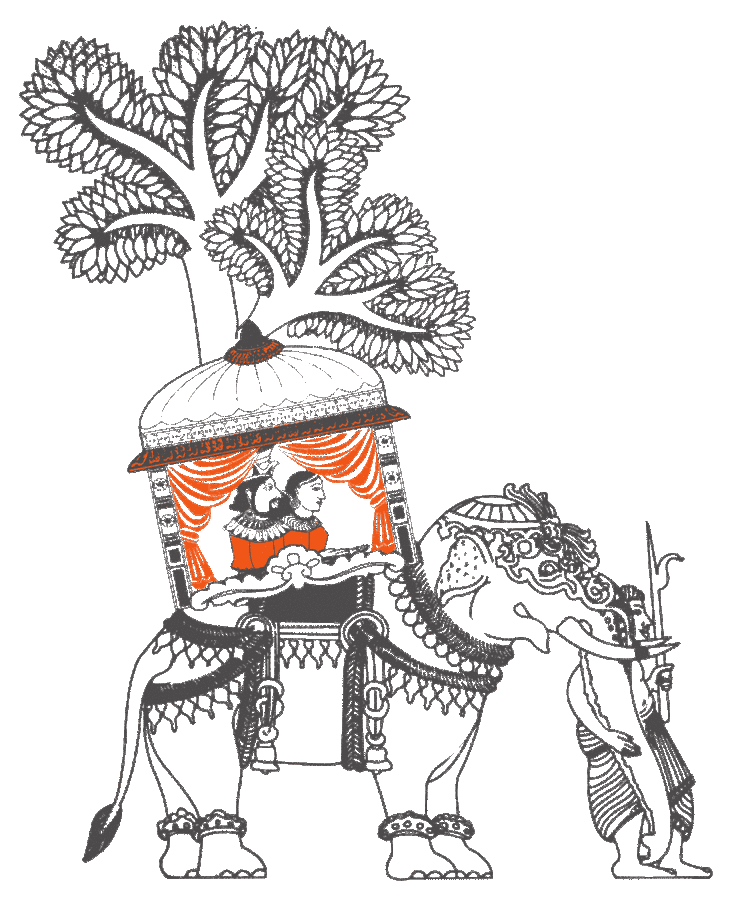
The Sinhalese chronicles record processions of royal elephants moving across these plains for the great festivals — fitted out in ceremonial cloth, ridden by king and queen, leading the relic of the Buddha through the streets of the capital.

The herds you'll see at Minneriya, Wilpattu and Kaudulla are the wild descendants of those courtly beasts: still wandering the same dry-zone tanks the ancient kings built to feed them.

Wilderness & Wildlife

Leopards, elephants, and the great gathering.

The dry zone around Anuradhapura is a mosaic of ancient tanks, secondary forest and protected reserves — and home to one of the densest concentrations of leopard and Asian elephant on earth. Three of the country's best parks are within a half-day from the hotel.

Best seasonMay–October (the Gathering)
PermitsDWC ticket + jeep
Hotel can arrangePrivate 4×4 with naturalist
Coming soon
Wilpattu National Park · 62 km

Sri Lanka's largest park, the leopard heartland.

1,317 km² of forest, scrub and the curious sand-rimmed natural lakes called willus. Sri Lanka's apex leopard density is here, alongside sloth bear, sambar, mugger crocodile and migratory water-bird. Quieter than Yala, more atmospheric.

1,317 km² · Best Feb–Oct · Half/full-day safari
Coming soon
Minneriya National Park · 90 km

"The Gathering" — the largest meeting of Asian elephants on earth.

Each year between July and September, as the surrounding tanks dry up, up to 300 elephants converge on the receding Minneriya tank in a single week. Bull elephants spar, calves drink, families re-form. There is nothing else quite like it on the continent.

~300 elephants · Aug peak · 16:00–18:30 best
Coming soon
Kaudulla National Park · 80 km

The Gathering's quieter twin.

Established only in 2002 as a continuation of the Minneriya–Giritale corridor, Kaudulla often hosts the elephants when Minneriya is busy or empty. Excellent for migratory and resident waterbirds, including the rare grey-headed fish eagle.

6,656 ha · 200+ bird species · Half-day jeep
Coming soon
Hurulu Eco Park · 42 km

A morning's drive — and elephants almost always.

The closest park to the hotel. A small slice of the Hurulu Forest Reserve opened to controlled jeep safari, with reliable elephant sightings year-round and a lean, less-crowded experience. A good choice if you only have a half-day.

Closest park · 25 km² · 3-hour safari
Before you go

A few practical archaeological courtesies.

Most of these sites are still active places of worship, owned and tended by the temple chapters. Light, dress and behaviour matter.

Dress & etiquette

  • White or light, modest dress for the Bodhi Tree and the principal stupas — knees and shoulders covered.
  • Shoes and hats off before stepping onto any stupa terrace; socks are fine.
  • Never photograph yourself with your back to a Buddha statue. It's a serious local offence.
  • Avoid pointing the soles of your feet at images or monks. Sit with legs folded sideways.
  • The hotel can lend a sarong or shawl at the front desk on departure mornings.

Best times to visit

  • Sacred City: dawn (06:00–08:30) for light, before the heat. Or late afternoon (16:30 onward).
  • Mihintale: sunrise — particularly during Poson Poya in June, when pilgrims walk by candlelight.
  • Sigiriya: gates open 06:30; aim for the rock by 07:00 to avoid the queue and the heat.
  • Wilpattu & Minneriya: afternoon safari (15:00–18:30). Mornings are good but later light is better for elephants at water.
  • Driest period February–September; avoid the inter-monsoon storms in late October–November.

Tickets & access

  • Anuradhapura Sacred City: a single foreigner ticket (USD 25 / day) covers most ASI-managed sites.
  • The Cultural Triangle pass (Polonnaruwa + Sigiriya + Dambulla + Anuradhapura) is the value option for two-day exploration.
  • Aukana, Mihintale and Vessagiriya have separate, much smaller temple-administered tickets (LKR ~200–500).
  • National parks: a DWC entry ticket plus a jeep with licensed driver — your safest, easiest route is via the hotel concierge.
  • Bicycles for Sacred City exploration available from the hotel; a guide on bicycle is the most pleasant way to see the ruins.
Three suggested days

If we were planning your visit ourselves.

An archaeologist's suggested rhythm. Each day is achievable from the hotel before nightfall.

Day i.

Within the Sacred City

  • 06:00Sri Maha Bodhi at dawn
  • 07:30Ruwanwelisaya & Thuparamaya
  • 09:00Lovamahapaya & Mahasena's Palace
  • 10:30Abhayagiri & Samadhi Buddha
  • 11:30Kuttam Pokuna twin pools
  • 12:30Lunch at hotel
  • 16:30Isurumuniya at sunset · Tisa Wewa walk
  • 18:30Jetavanaramaya by evening light
Day ii.

The hinterland

  • 05:30Depart for Mihintale (sunrise climb)
  • 09:00Breakfast at Mihintale
  • 10:00Drive to Aukana (Buda de Avukana)
  • 11:30Sasseruwa & Kala Wewa bund
  • 13:00Local lunch by the tank
  • 15:00Ritigala forest monastery walk
  • 17:30Return — sunset drinks at the pool
Day iii.

Sigiriya & the Gathering

  • 05:30Depart for Sigiriya
  • 07:00Climb Lion Rock (2 hrs)
  • 10:00Coffee at the gardens
  • 11:00Dambulla cave temples
  • 13:30Lunch in Habarana
  • 15:00Minneriya safari (the Gathering · Aug)
  • 19:00Return to Rajarata

Let us arrange a guide who can read the stones.

We work with a small panel of licensed archaeological guides — most of them lifelong Anuradhapura residents — who can speak to inscriptions, dating, and the everyday life of the ruined city. Tell us what you'd like to see and we'll build a day around it.

Reserve a Stay WhatsApp the Concierge Email Reservations